



























< Return to MilitaryGear.com

A Visual History of Warriors and Their Uniforms

Offbeat  July 29 2011
 — By Nora Holloway
A Visual History of Warriors and Their Uniforms

War garb has transformed throughout the ages. From furs and spears to bronze plate, warriors have changed with the times and adapted armor to make use of emerging technologies and materials. History is full of unique uniforms, but we’ve selected a few to show just how far we’ve come regarding military gear and clothing.

NEANDERTHAL WARRIORS, 300,000+ YEARS AGO

Before soldiers there were warriors. Before warriors there were Neanderthals with clubs and simple spears.

SUMERIAN WARRIORS, 3000-1700 B.C.

Not just anyone can pull off copper helmets and wicker shields. Enter the Sumerians -- quite possibly the first documented standing army. Oh- and they are credited with inventing this thing called the wheel.

EGYPTIAN WARRIORS, 1500-1069 B.C. (NEW KINGDOM)

Ain't no party like an ancient Egyptian party. Well, until the latter part of the Egyptian empire when wars were more common. Even then, warriors didn't wear a ton of armor and carried minimal weaponry.

ASSYRIAN EMPIRE, 911-605 B.C.

Assyrians certainly liked their leather. Soldiers wore leather armor and metal helmets. Although not depicted in the illustration, many of them wore knee-high boots, which had thin plats of iron sewn into the front for added protection.

PERSIAN IMMORTALS, 400 B.C.-???

These elite soldiers made of the core of Persian armies in times of war, but otherwise were part of the Imperial Guard. They wore robes over scaled armor and carried shields, short spears, swords and bows and arrows. Let's not forget that Persian tiara.

LEGIO XV APPOLLINARIS (ROMAN LEGIONNAIRES), 40 B.C.-499 A.D.

These dapper Roman legionnaires were recruited by Octavian and last appeared in history in the 5th century. The basics of the legionnaires uniform included plate and/or chainmail armor, shield and weapon of choice (usually a short sword).

ANGLO-SAXON, 590-1000

Anglo-Saxons didn't really have a "uniform" per se. Warriors generally wore helmets loose fitting clothing, such as tunics, and carried a shield and whatever weaponry they could get their hands on. But seriously dude, don't mess with their mead.

JAPANESE SAMAURI, 905-1870 A.D.

One of the most revered Japanese warriors, samurais wore an armor made of small scales of iron or leather. The scales were bound into small strips and waterproofed with lacquer. Completing the outfit, the helmet protected the entire face, neck and head.

KNIGHTS IN PLATE ARMOR, 1099-1730 A.D.

Knights and their shining armor had been around for a long time, but it wasn't until the late 2nd century that they were militarized. Obviously, they donned full plate armor and generally fought to protect chivalry and the Church. They may have been able to withstand a beating, but they weren't very light on their feet due to their heavy armor.

AZTEC WARRIORS, 1323-1521 A.D.

Aztec warriors were pretty fierce. The bravest of these men were the eagle warriors, who wore feathered helmets with an open beak. They were generally armed with a shield and a melee weapon, like a spear or club.

NAPOLEONIC SOLDIERS, 1799-1814

The uniforms worn by Napoleon’s soldiers offered little in the way of protection, both from enemy fire and the harsh winters. The lucky ones had boots, blue coat, pants and headgear. Realistically, uniforms had to be light because these soldiers had to walk. A lot.

ZULU WARRIORS, 1800 A.D.-PRESENT

In their fight against the empire, Zulu warriors carried a heavy, broad-bladed stabbing spear and king-issued shields. On occasion, a soldier or two was known to pack a Napoleonic piece.

RUSSIAN GERMAN SOLDIER, WORLD WAR II (1943)

Everyone knows what the British, German and American WWII uniforms looked like. What about the Russian winter uniforms? Russian soldiers wore winter overtrousers and oversmock in snow white to help blend in with their frosty surroundings.

U.S. SOLDIERS, PRESENT DAY

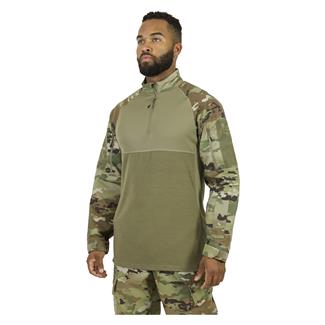
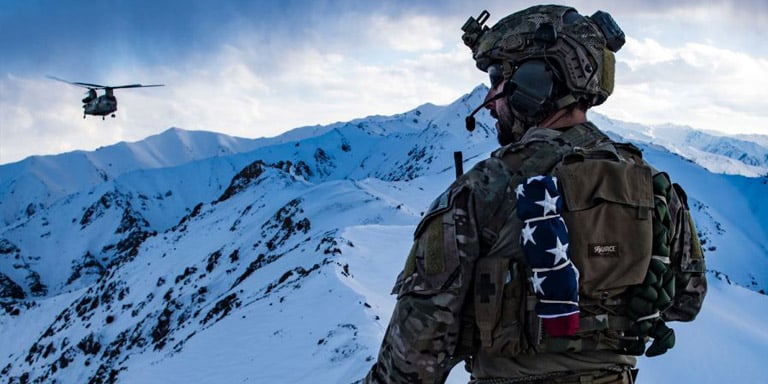
Military dress has come a long way. Today’s soldiers depend on cutting edge camouflage technology and gear to keep them safe from enemy fire. Uniforms continue to improve throughout the years, much to the relief of those in the service.

What “uniform” do you think was the most impressive?

(8) Readers Comments

  1. dont forget muslim warriors
    they should be right after zulu

  2. well the japanese where farely impressive for anicient warriors but then they wore their armor to die in or parade in victory remember the samuria went into battle hoping to die. But i couldnt help noticing that you used the persians but forgot the Spartans and other greek hoplites who would have fit in the middle between the persians and romans on the list. for armor developement because Spartans/greek hoplites did have better armor then the persians well heavier armor that protected better then the persians did.

  3. Plate armour wasn’t all that heavy, and didn’t restrict movement all that much. There are multiple videos of people performing feats of agility while wearing full plate.

  4. Just an aside, the Roman legionaries you picture are representive of the mid first to about the mid second century. It is generaly excepted that by the third and fourth century the legion was a second rate lighter armed reaction force; they had a lot less armour than previously.

  5. Note* I meant Eagle warrior reffering to the Aztecs in the above comment.

  6. I thought the Egyptian soldier with the hand axe half of his body size was wicked lookin’. The Jaguar was pretty cool too, with the decked out headdress.
    I liked the Roman get-up as well. They’re all pretty cool actually, but the Roman armor and weapons seem the most practical to me.

  7. Maybe they stole it from the German soldiers they captured…

  8. Your Russian soliders, WWII are wearing German helmets, carrying German weapons, and wearing German field gear…

Leave a Reply

Your email address will not be published. Required fields are marked *

You may use these HTML tags and attributes: <a href="" title=""> <abbr title=""> <acronym title=""> <b> <blockquote cite=""> <cite> <code> <del datetime=""> <em> <i> <q cite=""> <strike> <strong>